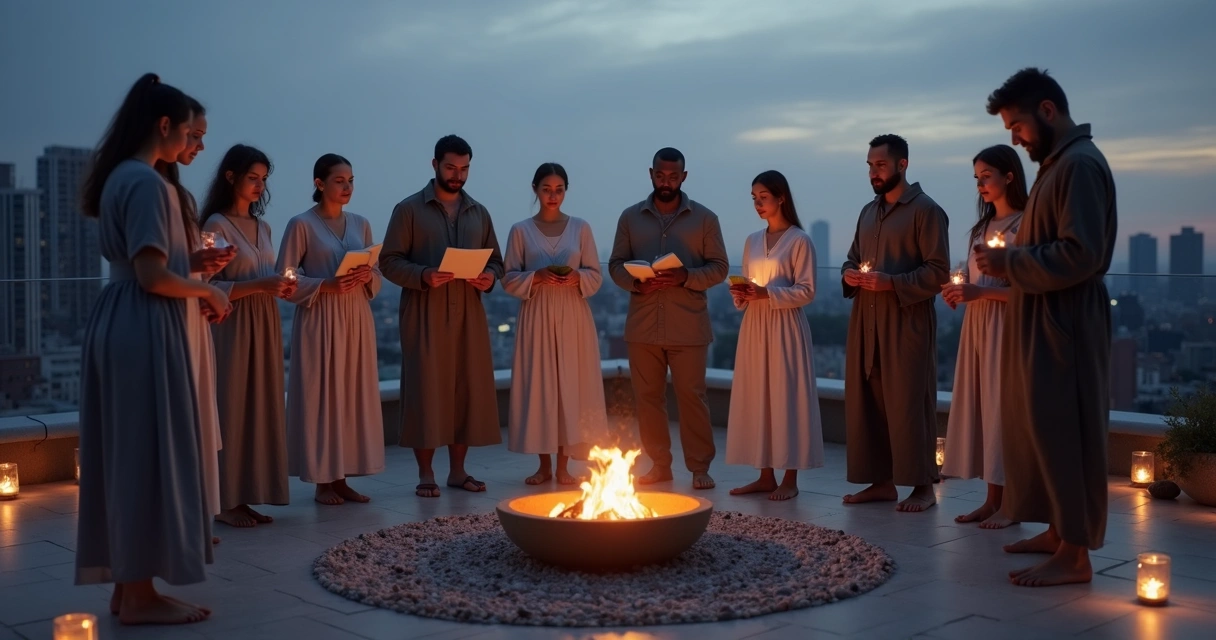

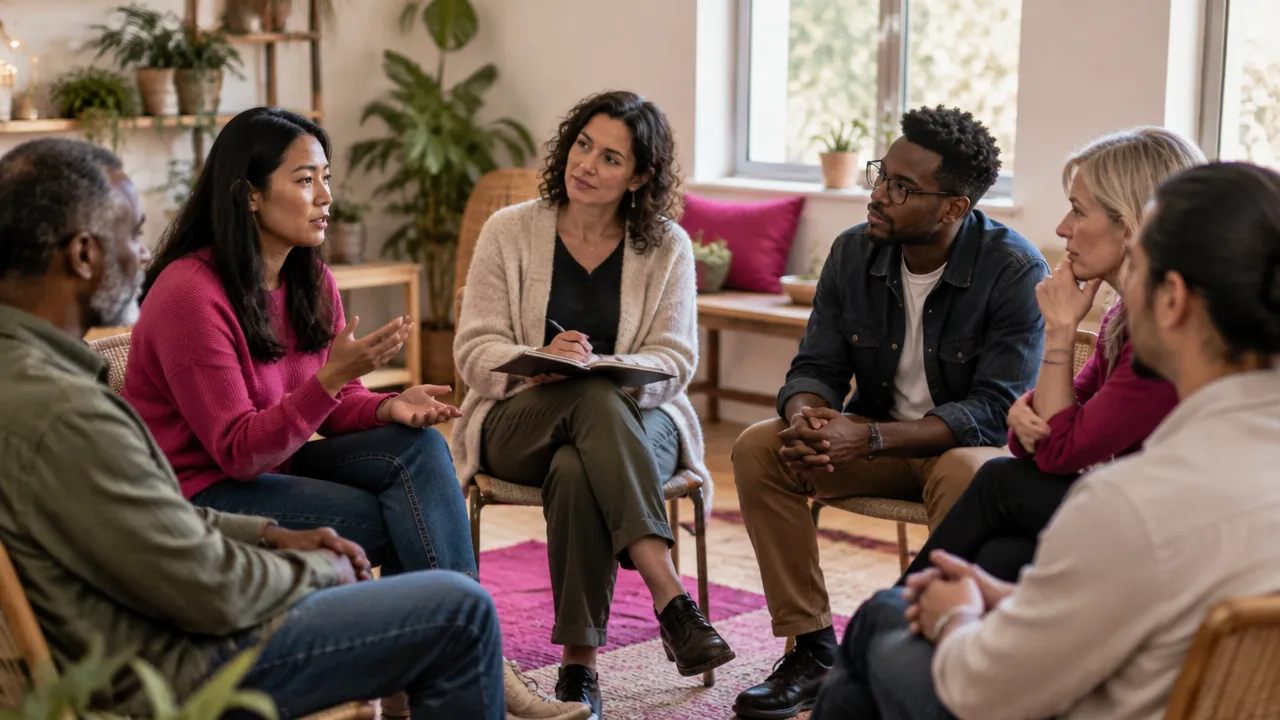
Self-reflection rituals help groups recover from conflict by giving people a reliable way to pause, examine their own contributions, hear the impact of others’ experiences, and agree on what changes next. They are useful for teams, community groups, and families when a disagreement has damaged trust but participants can engage safely. The ritual is not a shortcut to forgiveness; it is a structure for responsible repair.
Key ideas for using reflection after conflict
- A simple, repeated format can make difficult conversations more predictable.
- Reflection works best when each person considers both their intent and their impact.
- Listening and acknowledgment should come before problem-solving.
- Groups need concrete follow-through, not just a meaningful meeting.
- Participation should be voluntary when safety or power differences are concerns.
Why a shared ritual can make repair more possible
Conflict often leaves a group caught between two impulses: defend the self or blame someone else. A reflection ritual creates a third option. It gives members a defined pause in which they can ask what happened, how they contributed, and what the group needs to do differently.
Predictable steps matter because they reduce the pressure to improvise while emotions are high. A repeated opening, listening turn, and closing action can signal that the group intends to address harm without turning the conversation into a public trial. This is not proof that a ritual will make people calm or reconciled. It simply offers a container for a more deliberate response.
Research on 51 work teams linked psychological safety with team learning behavior, a useful distinction for groups reflecting on mistakes. The study of team psychological safety does not show that a ritual alone resolves conflict; it supports the importance of conditions where people can speak about problems and learn together. Groups exploring a broader practice can also consider how post-conflict recovery rituals create shared meaning.
Reflection shifts the question from blame to responsibility
Useful reflection does not ask people to accept equal blame for unequal harms. Instead, each person examines their own choices while the group remains attentive to differences in authority, risk, and impact. That distinction helps avoid false balance, where someone with less power is asked to carry the same responsibility as someone who controlled the decision.
Try prompts that focus on observable actions rather than character judgments:
- What did I say or do that affected the situation?
- What was I feeling or assuming at the time?
- What impact have I heard, even if it was not my intention?
- What can I do now, and what change should the group make?
Members do not need to tell identical stories about the conflict. They do need room to hear how their actions landed. When the tension involves hierarchy or persistent silence, understanding power dynamics in group conflict can help a facilitator avoid treating unequal experiences as interchangeable.
A practical 30-minute ritual for group repair
A useful group reflection ritual is brief, repeatable, and tied to a decision or repair action. Before starting, name the purpose, set a no-interruption agreement, and make clear that passing is allowed. Do not ask people to disclose private feelings or make a public apology on demand.
- Arrive, 3 minutes: Begin with a quiet pause. State the issue in neutral, specific language and clarify the purpose of the meeting.
- Write, 5 minutes: Invite each person to note what they experienced, their own contribution, and one question they still have.
- Listen, 12 minutes: Offer each person a turn. Others listen without rebutting, then briefly reflect what they understood.
- Make meaning, 5 minutes: Identify what the group learned about communication, decisions, or unmet needs. Do not force consensus about every detail.
- Choose a next step, 5 minutes: Agree on one or two specific actions, name who owns them, and set a date to check progress.
These time blocks are a practical template, not a research-validated formula. The point is to give attention to listening and accountability, while ensuring the conversation ends with a follow-up. A smooth stone or another simple object can mark whose turn it is, but the symbol should support the process rather than distract from it.

What makes reflective practice useful, not performative?
A ritual becomes performative when the group appears to listen but avoids changing anything. It becomes useful when people can point to a specific behavior, decision, or pattern that will be different afterward. For example, a project team might agree that objections must be recorded before a decision is final, then revisit that practice at its next meeting.
Facilitators should summarize agreements in plain language, distinguish commitments from hopes, and check whether the people most affected consider the proposed action adequate. A small act of emotional micro-repair, such as correcting a misrepresentation or following up privately, may matter more than a dramatic closing gesture.
Some conflicts require more than a group circle. If there are threats, harassment, retaliation, or a substantial power imbalance, do not use a public ritual to pressure people into disclosure or reconciliation. Consider private support, clear safeguards, or an appropriately trained neutral facilitator. A group can also use a structured mediation process when direct conversation alone is not working.
How groups know the ritual is helping
Success does not mean everyone feels close immediately or agrees about what happened. More realistic signs of progress include clearer acknowledgment of impact, fewer repeated misunderstandings, greater willingness to raise concerns, and completion of the actions the group promised.
Check back after an agreed interval: What changed? What remains unresolved? Does anyone need a different form of support? If participants still cannot speak freely, the format needs adjustment. Building emotional safety in group settings is ongoing work, not a box a single meeting can check.
In a mature group, conflict is neither denied nor treated as proof that the relationship has failed. A self-reflection ritual helps turn friction into information, responsibility, and a next step, while preserving people’s dignity and the possibility of continued cooperation.
Frequently asked questions
Why is self-reflection important after group conflict?
Self-reflection helps group members notice how their words, choices, and assumptions affected the conflict. A shared ritual gives everyone a structured way to take responsibility, listen to impact, and identify a next step. It supports repair, but it does not require people to agree on every detail or forgive before they are ready.
What is an example of reflective practice for a group?
A group can set aside 30 minutes for a facilitated check-in. Each person writes briefly about what happened, what they contributed, and what they need now. Members then share without interruption, reflect back what they heard, and agree on one practical action to repair harm or prevent a repeat.
How do rituals affect group well-being after conflict?
Rituals create a predictable structure for pausing, listening, and returning to a difficult issue. That structure can make participation feel less chaotic and help a group acknowledge harm without rushing straight to solutions. The ritual cannot guarantee trust or emotional safety; those depend on how people use it and whether power is handled fairly.
Can a reflection ritual resolve a conflict by itself?
No. A reflection ritual can help people understand what happened and choose accountable next steps, but it cannot repair harm on its own. The group may also need changes to decision-making, boundaries, resources, or leadership. If participants feel unsafe, a private conversation or trained facilitator may be more appropriate.
What should groups do if people do not feel safe speaking?
Do not require public disclosure. Offer people the option to pass, write privately, speak with a facilitator, or leave and return later. If retaliation, coercion, or serious harm is possible, pause the group exercise and arrange appropriate support. A ritual is useful only when participation is meaningfully voluntary.