

When we talk about economic justice, we often start with wages, prices, taxes, and growth. These matter. Still, in our view, they do not tell the whole story. An economy is not only a system of exchange. It is also a system of recognition. It shows who is seen, who is ignored, and whose pain is treated as acceptable.
Human valuation in economics means judging economic success by the worth of people, not only by the size of output.
We can feel the gap when we look at daily life. A caregiver works long hours, yet struggles to pay rent. A worker loses income after illness and is treated like a failure. A child grows up in a home marked by legal hardship and carries the cost for years. These are not isolated stories. They point to the moral structure inside economic life.
Global numbers make this harder to ignore. According to the International Labour Organization’s 2025 State of Social Justice report, the top 1% receives about 20% of income and holds 38% of wealth, while around 800 million people still live on less than US$3 per day. We think these figures show more than inequality. They show a pattern of valuation. Some lives are priced high by the market, while many human needs are priced low or not seen at all.
Why valuation changes the justice debate
Economic fairness is often framed as a matter of distribution. We agree that distribution matters, but valuation comes before it. Before wealth is shared, labor is ranked. Before care is funded, care is judged. Before public policy is written, some experiences are treated as central and others as marginal.
Value is never neutral.
We have seen this in simple settings. In one workplace, the person who resolves tension, supports new staff, and protects team trust may receive less respect than the person who only drives short-term numbers. The institution then pays later through burnout, conflict, and turnover. The same logic appears at social scale.
Economic justice begins to deepen when we ask not only “Who gets what?” but also “What kind of human contribution do we honor?”
Five new perspectives
1. Value care as social infrastructure
Care work still sits in a strange place. Everyone depends on it, yet much of it is unpaid, underpaid, or treated as a private duty. Raising children, supporting elders, helping people recover from illness, and holding emotional stability in families all sustain economic life. Without them, no labor market can stand for long.
We think a fair economy must treat care as social infrastructure, not as invisible kindness. That means:
Paying care work in ways that reflect its social weight.
Building policies that support family leave, elder support, and child care.
Recognizing emotional labor as part of real work, even when it is hard to count.
When care is ignored, societies often shift hidden costs onto women, low-income households, and already strained communities. The books may look balanced on paper. Human life does not.
2. Measure harm, not only gain
Many economic systems are skilled at measuring profit and weak at measuring damage. If a business raises returns while leaving workers anxious, families unstable, or neighborhoods depleted, we should not call that full success.
A just economy must count human harm with the same seriousness that it counts financial gain.
This includes mental strain, time poverty, forced instability, and broken social trust. We are not saying every cost can fit neatly into one formula. We are saying the refusal to count these costs is itself a moral choice.

This wider lens also changes public debate on crime and poverty. The Vera Institute of Justice reports on nearly 2 million people incarcerated in the United States and shows how mass incarceration deepens wealth and income gaps. If we only count the operating cost of prisons or the labor market loss after release, we miss the wider human damage done to families, trust, and future stability.
3. Treat dignity as an economic condition
Dignity is often spoken of as a moral ideal, separate from economics. We do not see it that way. Dignity affects how people learn, work, plan, and participate. Someone living under humiliation, constant disrespect, or unstable access to basics will have fewer real choices, even if a formal opportunity exists on paper.
This perspective asks us to look at everyday conditions such as:
Whether wages allow a person to live without chronic shame.
Whether public systems treat people with respect.
Whether work arrangements leave room for health, family, and self-respect.
We have all seen how tone can change a person’s posture in seconds. A dismissive office, a degrading interview, or a cold public counter can shrink someone’s sense of place. Economic justice cannot be built on repeated humiliation.
4. Include intergenerational effects
One of the deepest blind spots in economics is short time vision. A policy may seem cheap today while creating pain that lasts for decades. Human valuation asks us to look at what children inherit, not only what current adults consume.
The evidence is sobering. A National Bureau of Economic Research study on children’s exposure to the justice system found that 39% of children born between 1999 and 2005 had a parent or co-resident adult with a criminal charge. We think this shows how widely legal and economic strain enter childhood. The effect is not only financial. It can shape stress, belonging, school outcomes, and long-term trust.
Children inherit systems before they inherit wealth.
If we value human life seriously, then economic justice must ask what our institutions plant in the next generation. Debt, instability, stigma, and family fracture do not stay where they begin.
5. Redefine return through human impact
The last perspective is simple to state and hard to live by. We should judge economic return by human impact as well as monetary return. This does not reject profit. It places profit inside a wider standard.
In our view, a healthier idea of return asks:
Does this action strengthen people’s real capacity to live well?
Does it reduce fear, exclusion, and preventable suffering?
Does it support durable trust across workplaces, families, and communities?
This shift can guide business choices, public budgets, and local planning. It can also guide personal ethics. We may not control an entire system, but we do shape the values we reward through our own decisions.
What this means in practice
If we bring these five perspectives together, economic justice becomes more human and more honest. We stop treating people as afterthoughts of policy. We start treating them as the point of policy.
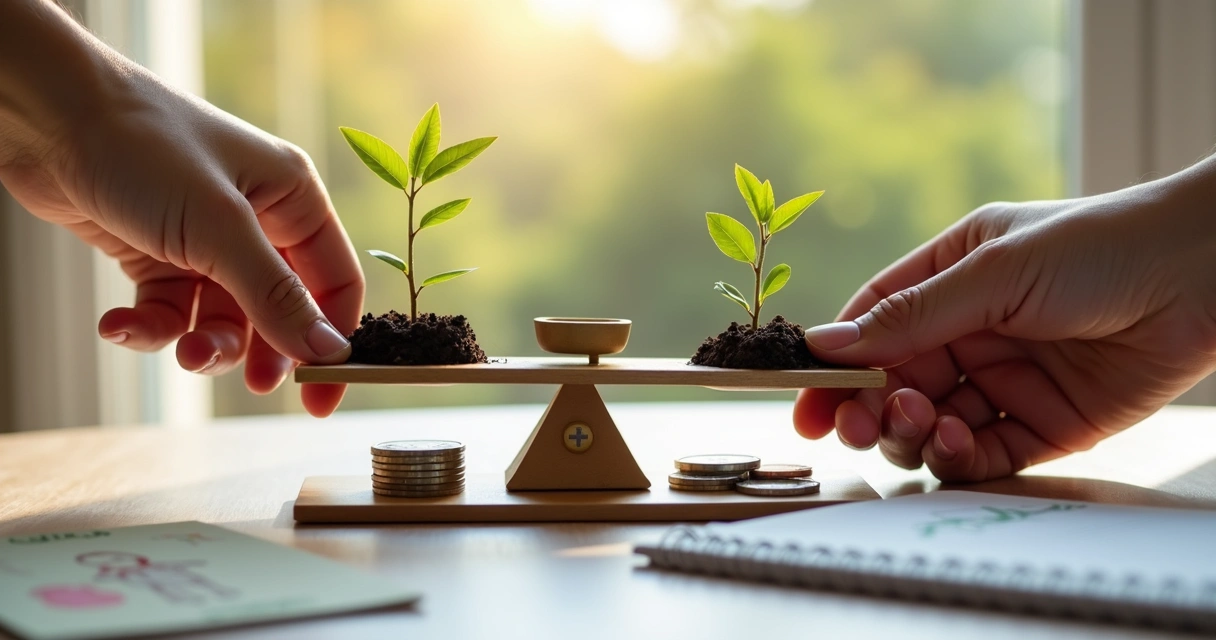
That changes the questions we ask. Not only how much wealth was made, but what kind of life was made possible. Not only how cheap a system is, but who carries its hidden burdens. Not only who wins now, but what the next generation will be forced to repair.
Human valuation offers a moral test for economics: if a system grows while people break, the system is not just.
Conclusion
We believe economic justice becomes clearer when we place human valuation at its center. Care must be seen as real infrastructure. Harm must be counted. Dignity must be treated as a material condition. Long-term effects must be included. And return must be judged by human impact, not by money alone.
This is not a softer way of thinking about economics. It is a truer one. Numbers matter, but they do not speak on their own. People give them meaning. If we want fairer systems, we need forms of valuation that can see the full weight of a human life.
Frequently asked questions
What is human valuation in economics?
Human valuation in economics is the practice of judging economic systems by how they treat people, not only by output, income, or market price. It asks whether work, care, dignity, health, and social trust are being respected in real life.
Why does human valuation matter for justice?
It matters because justice is not only about dividing money. It is also about deciding whose labor counts, whose pain is ignored, and whose future is protected. Human valuation helps reveal hidden unfairness inside normal economic rules.
How can valuation improve economic fairness?
Valuation can improve fairness by expanding what we measure and reward. When societies count care, human harm, dignity, and long-term effects, policies and institutions are more likely to support stable lives instead of only short-term financial gain.
What are the five new perspectives?
The five perspectives are these: value care as social infrastructure, measure harm as well as gain, treat dignity as an economic condition, include intergenerational effects, and redefine return through human impact.
Where can I learn more about economic justice?
You can learn more by reading public research on inequality, labor conditions, incarceration, and social policy from trusted institutions and academic studies. A good start is to follow current data on wealth gaps, work conditions, family stability, and access to fair treatment in public systems.