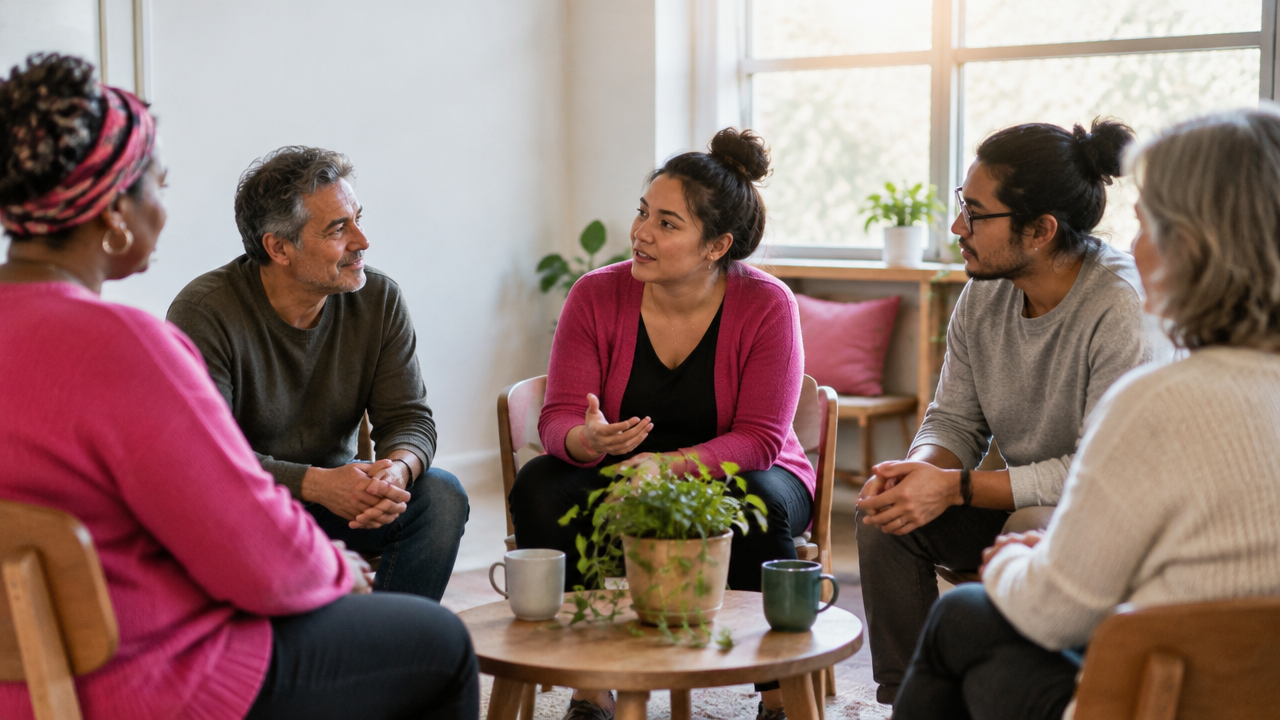

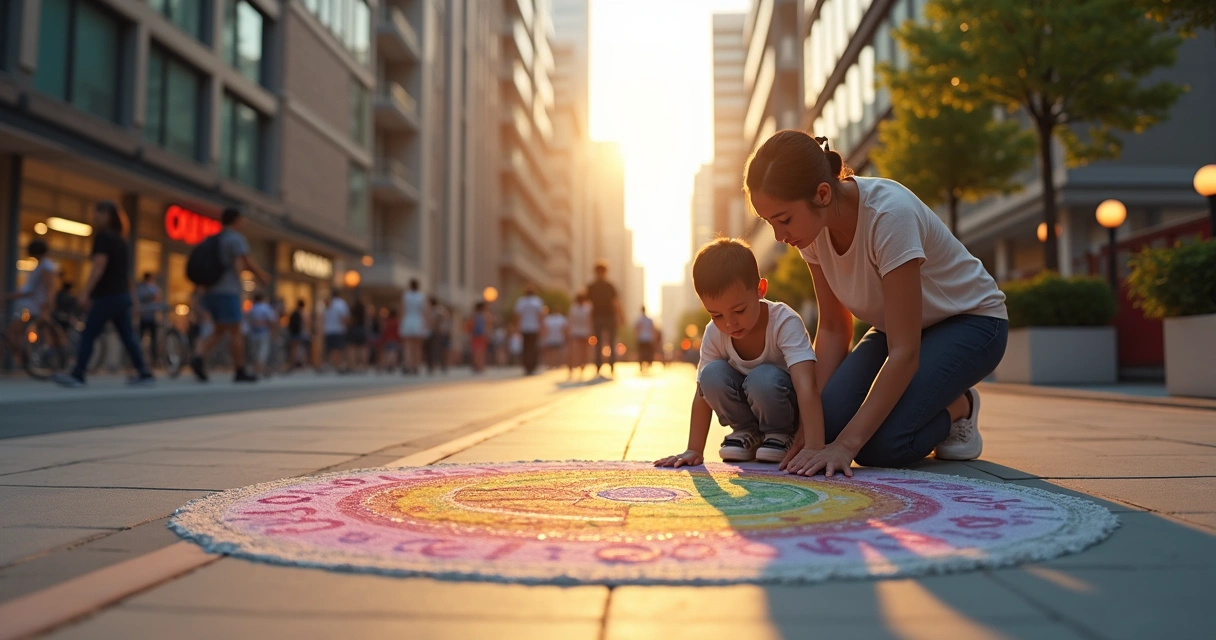
Urban parenting asks a lot from us. We raise children in busy streets, small homes, loud schools, and fast schedules. We often want to give safety, attention, and good values, yet the city keeps pulling everyone into hurry. In our experience, this is where Marquesan values can help. They bring us back to emotional responsibility, clear presence, respect, and conscious action.
Marquesan values in urban parenting mean raising children with emotional maturity, ethical awareness, and respect for human impact.
We do not see parenting as control. We see it as guidance. A child in the city is not shaped only by family rules, but also by traffic, screens, peer pressure, noise, and the mood adults carry home. That is why our values must be lived, not only explained.
We once saw a parent at a crowded train station kneel beside a crying child instead of dragging him away. The parent spoke softly, waited, and helped the child breathe before moving on. It took two minutes. It changed the whole moment. That is urban parenting with consciousness. Short. Firm. Human.
Calm is also guidance.
What Marquesan values look like at home
These values are not abstract ideas for rare moments. They belong in the kitchen, on the sidewalk, in the car, and during homework. In simple terms, we can express them through daily attitudes that teach children how to live with themselves and with others.
We usually frame them in practical ways such as:
- Emotional responsibility, where each person learns to name feelings without attacking others.
- Presence, where we give real attention instead of half-listening while looking at a screen.
- Respect for limits, where boundaries are clear, calm, and consistent.
- Human dignity, where we correct behavior without humiliating the child.
- Awareness of impact, where children learn that actions affect family, neighbors, animals, and public spaces.
When we teach these values, we are not trying to create perfect children. We are helping them become more conscious people. That is a different goal, and a much healthier one.
Why cities make this harder
City life can wear down the nervous system. Noise, long commutes, crowded places, and constant digital contact can leave both adults and children reactive. A parent may come home tired. A child may return from school overstimulated. Then a small conflict, like shoes left in the hallway, turns into a large one.
In urban parenting, many behavior problems are not about bad character, but about overloaded emotions.
This matters because punishment without understanding often deepens the problem. If a child is already flooded, yelling teaches fear, not balance. We think parents need tools that lower intensity first. Then teaching can happen.
That may look like a pause before correction, a quieter tone, or a family habit of settling the body before discussing what went wrong. It sounds simple. Sometimes it is not. But it works far better than reacting on impulse.

How to practice these values every day
The best way to bring values into family life is to attach them to routines. Children learn better from repetition than from speeches. We can use ordinary city moments as training grounds for maturity.
During movement
Walks, bus rides, and school drop-offs give us small chances to teach awareness. We can ask children to notice elders who need space, to keep their voice level in shared places, and to observe how public behavior affects others.
We might say, “Let us leave this bench clean for the next person,” or “Notice how pushing changes the whole line.” These are short lessons, but they build civic character.
During conflict
Conflict is one of the best classrooms. When siblings fight or a child speaks harshly, we can guide with a sequence:
- Pause the escalation.
- Name what is happening.
- Help the child identify the feeling.
- Set the limit clearly.
- Repair the impact.
This sequence helps us stay steady. Instead of “Stop this right now, what is wrong with you?” we can say, “You are angry. Hitting is not allowed. Now we repair.” The child still faces a boundary, but without shame.
Children learn values best when correction includes repair.
During digital use
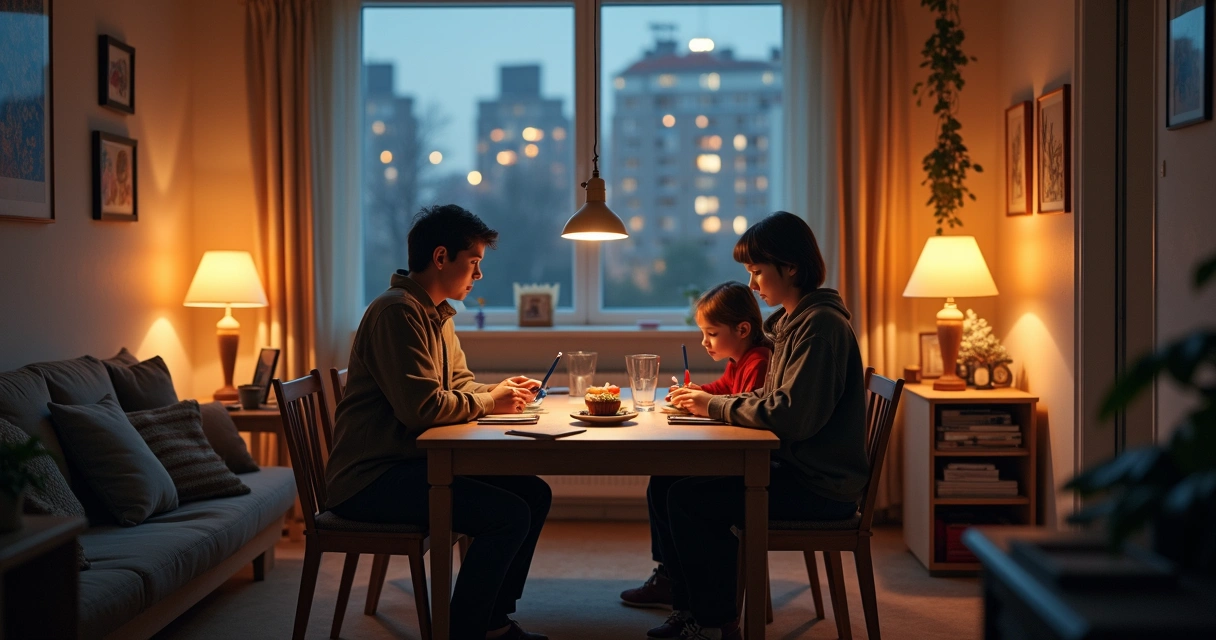
Urban children often spend a lot of time with screens. We think values must enter this space too. Presence means not letting devices rule the emotional climate of the home. Respect means no mocking, no hidden cruelty, and no endless distraction during meals or conversations.
A family can create three clear digital habits:
- Devices stay away during shared meals.
- Conflicts started online are discussed face to face.
- Adults follow the same screen rules they expect from children.
That last point matters a lot. Children notice everything. If we ask for attention while scrolling, our words lose force.
Modeling before teaching
Many parents ask how to make children more respectful, more patient, more aware. Our answer is often uncomfortable. We begin with ourselves. Children absorb tone before content. If we want dialogue, we must speak with dignity. If we want accountability, we must admit when we were unfair.
One evening, after a rushed day, we may snap at a child for moving too slowly. Later, we can return and say, “We spoke harshly. The limit stays, but that tone was not right.” This does not weaken authority. It deepens trust.
Repair builds authority.
When adults model self-correction, children learn that strength and humility can exist together. That is a lasting lesson for life in any city.
Building a family culture in a crowded world
Urban parenting improves when the home has a clear emotional culture. Children need to know what kind of family they belong to. Not in a rigid way, but in a stable one. We can say, “In our home, we tell the truth,” or “In our home, anger is allowed, disrespect is not.” These simple identity statements help children feel structure.
It also helps to create small rituals. A two-minute check-in after school. A quiet breath before bed. A short reflection after a hard day. Rituals slow the pace and help children process city life instead of being carried by it.
A strong family culture gives children inner structure when the outside world feels scattered.
This is how values become lived experience. Not through long theory, but through repeated moments of presence, limit, and repair.
Conclusion
Using Marquesan values in urban parenting is not about raising children away from city life. It is about helping them live in it with more balance, respect, and awareness. We teach them to read emotions, honor limits, care about their impact, and recover after mistakes. We also accept that this work begins with us.
The city will always move fast. Our role is not to match all of its speed. Our role is to give children an inner ground that stays steady in the middle of noise. When we parent with presence and emotional responsibility, we do more than solve daily conflicts. We shape human beings who can live with others without losing their dignity.
Frequently asked questions
What are Marquesan values in parenting?
Marquesan values in parenting are principles such as emotional responsibility, conscious presence, respect for limits, human dignity, and awareness of impact. In practice, they help us guide children without humiliation and teach them to handle feelings and relationships with maturity.
How to teach Marquesan values in cities?
We teach them through daily routines and real situations. Public transport, shared spaces, school stress, digital habits, and sibling conflict all become learning moments. Short guidance, clear limits, and regular repair are usually more effective than long lectures.
Is it hard to use Marquesan values?
It can be hard at first because city life is tiring and fast. Many parents are carrying stress of their own. Still, once we begin with small habits, such as pausing before reacting or naming feelings clearly, these values become more natural over time.
What are the benefits for urban children?
Urban children can gain better emotional balance, more empathy, stronger self-control, and a healthier sense of responsibility toward others. These values also help them face noise, pressure, and social tension without becoming as reactive or disconnected.
Where can I learn more about Marquesan values?
We suggest starting with consistent reflection on your family habits, emotional patterns, and ways of handling conflict. Learning more often begins with observing how values appear in daily life, then deepening that practice through study, dialogue, and conscious parenting work.