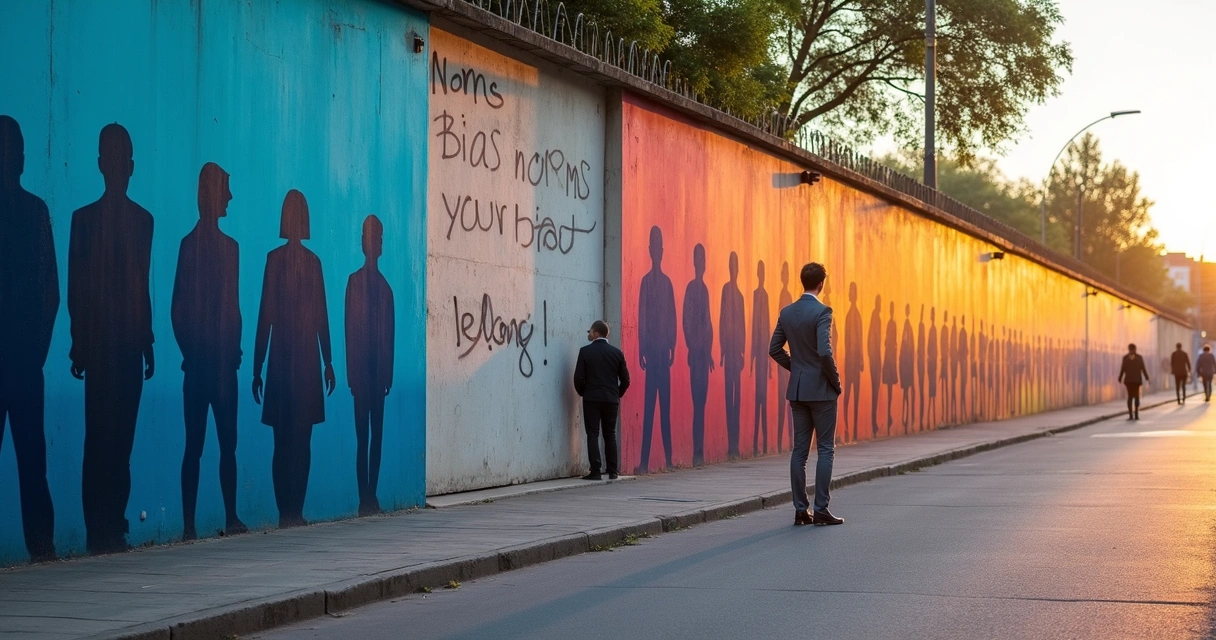
We often talk about inclusion as if it were a public value that everyone already accepts. In daily life, though, the story is less clean. A person is invited to the meeting but not heard. A student is welcomed into the classroom but judged before speaking. A worker is praised for fitting in, not for being fully themselves. This is where marginalization keeps moving, often in quiet ways.
Marginalization is not always loud. Many times, it works through habits, assumptions, and unspoken rules.
We see this in families, schools, workplaces, and public spaces. One person gets more patience. Another gets more suspicion. One mistake is treated as human. Another is treated as proof. These differences may look small in the moment, yet they build very different social realities over time.
In our experience, hidden bias is one of the hardest barriers to name because it often hides inside normal behavior. People may think, “I treat everyone the same.” But sameness is not always fairness. If someone enters a room already carrying the weight of stereotype, exclusion can happen even without open hostility.
How hidden bias works
Hidden bias is a pattern of quick judgments that shapes how we see, listen, trust, and respond. It can be linked to disability, age, race, class, religion, body type, gender, language, or any trait society has learned to rank. These judgments may happen so fast that we do not notice them at first.
A familiar scene shows this well. We imagine two people arriving late to the same event. One is seen as busy and overcommitted. The other is seen as careless. The facts are similar. The interpretation is not. Bias fills in the gap.
Bias acts before reason catches up.
That is why intention alone is not enough. A person can value respect and still act from an old social script. We have seen that many exclusionary patterns survive not because people openly defend them, but because they do not question the way they have learned to read others.
Some common places where hidden bias appears include:
- Hiring choices based on who feels “professional” or “a good fit”
- School discipline that punishes some students more harshly than others
- Medical settings where pain reports are doubted or minimized
- Social groups that invite presence but not real participation
These are not abstract issues. They shape confidence, access, safety, and belonging.

Marginalization leaves a human mark
Marginalization is not only about being left out of systems. It also affects how people feel in their own bodies and minds. When exclusion happens again and again, many begin to shrink their voice, edit their behavior, or expect rejection before it comes. We think this is one of the deepest harms of bias. It teaches people to prepare for injury.
Inclusion fails when people must hide parts of themselves just to be tolerated.
This can start early. A child notices who gets called “gifted” and who gets called “difficult.” A teenager learns which names are mocked. An adult sees that speaking plainly brings different consequences depending on who is speaking. None of this stays on the surface. It shapes self-worth and social trust.
We should also say clearly that disability bias remains a strong example of this pattern. Research discussed by the Harvard Gazette reported that implicit biases toward disabilities changed only about 3% over 14 years. That finding tells us something sobering. Some forms of social bias are not fading quickly through time alone. If we do not confront them directly, they settle deeper into daily life.
What inclusion really asks of us
Inclusion is often confused with access, representation, or polite language. Those matter, but they do not complete the task. Real inclusion changes the conditions of belonging. It asks whether people can speak without penalty, participate without being filtered through stereotype, and exist without having to prove their humanity first.
We think inclusion has at least three layers:
- Presence, where people are allowed into the space.
- Participation, where their voice affects what happens.
- Respect, where their identity is not treated as a problem to manage.
When any of these layers is missing, a group can look inclusive from the outside while still producing exclusion inside. We have all seen settings where diversity is visible, yet power and trust remain tightly controlled.
Short statements often reveal the difference. “You are welcome here” sounds good. “We changed how this space works so you can belong here” goes further. The second sentence carries responsibility.
How institutions repeat bias without noticing
People create institutions, but institutions also train people. That is why hidden bias can feel personal and structural at the same time. A manager may believe they are simply following standards. A teacher may feel they are only reacting to behavior. A public servant may think they are treating cases consistently. Yet rules are often shaped by older assumptions about who is trustworthy, capable, calm, educated, safe, or normal.
This is where marginalization can become self-reinforcing. We give fewer chances to some groups, then use the results of that exclusion to justify giving them less.
Bias becomes structural when unfair assumptions are repeated through policies, routines, and culture.
We have found it useful to watch for warning signs such as:
- Feedback that is vague for some people and developmental for others
- Leadership roles that go to those who already match the dominant style
- Accessibility treated as an extra request instead of a shared standard
- Conflict judged more harshly when it comes from marginalized voices
None of these patterns has to be dramatic to cause harm. Quiet repetition is enough.
What we can do differently
Hidden bias does not disappear through good wishes. It needs observation, correction, and humility. We do not become more inclusive by claiming innocence. We become more inclusive by building better habits.
In our view, healthy change starts with a few grounded actions:
- Pause before fast judgments and ask what assumption is shaping them.
- Review decisions in groups, especially when “fit” or “professionalism” is used.
- Listen for who is interrupted, doubted, or explained away most often.
- Make access part of planning from the start, not a late adjustment.
- Create ways for people to report exclusion without fear of payback.
These steps sound simple. They are not always easy. They ask us to see what has felt ordinary. Still, that is where many repairs begin.
Conclusion
Marginalization and inclusion are not just opposing ideas. They are living forces inside daily choices. One narrows who gets to belong. The other widens dignity, voice, and safety. Hidden bias sits between them, pushing outcomes long before people name what happened.
We believe a mature society is measured not by how well it speaks about inclusion, but by how honestly it faces the habits that block it. Change starts in small moments. Who we trust. Who we hear. Who we defend. Who we assume belongs. That is where social direction is set.
Inclusion begins where excuses end.
Frequently asked questions
What is marginalization in society?
Marginalization in society is the process by which individuals or groups are pushed to the edges of social, economic, cultural, or political life. It happens when people have less access to power, respect, safety, or opportunity because of identity or social position.
What does inclusion really mean?
Inclusion means more than allowing people into a space. It means creating conditions where they can participate, be heard, and be respected without having to suppress who they are. True inclusion changes how a group functions, not just who is present.
How do hidden biases affect inclusion?
Hidden biases affect inclusion by shaping decisions and reactions in subtle ways. They influence who is trusted, who is seen as capable, who gets support, and who is judged more harshly. Even when people speak in favor of fairness, hidden bias can still produce exclusion.
How can organizations promote inclusion?
Organizations can promote inclusion by reviewing policies, checking biased patterns in hiring and feedback, planning for accessibility from the start, and creating safe ways for people to speak up. Training helps, but daily practice, accountability, and fair systems matter just as much.
What are examples of hidden bias?
Examples of hidden bias include assuming one worker is more professional because of accent or appearance, interrupting some voices more than others, doubting a disabled person’s needs, or treating the same behavior differently based on identity. These acts may seem small, but repeated over time they shape who is included and who is pushed aside.