
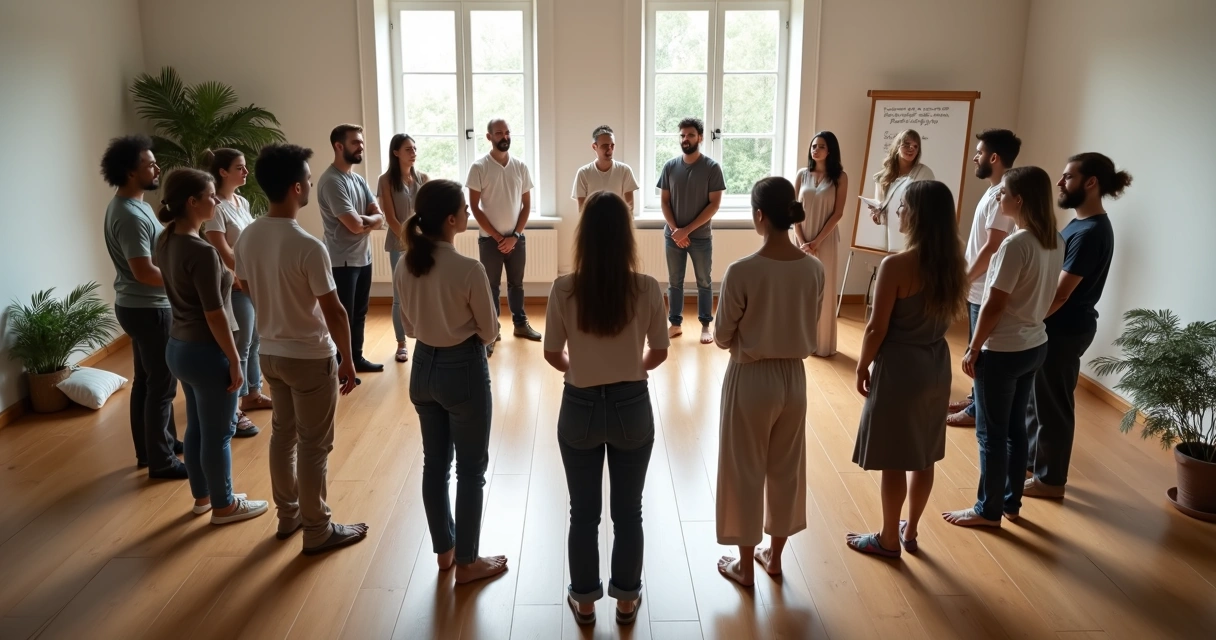
Working in groups can uncover hidden patterns that affect our decisions, relationships, and even how we solve challenges. Over time, we have seen that integrative constellation practice helps groups see these patterns clearly, creating space for deeper understanding and real connection. With simple but profound exercises, a group can discover new insights, resolve underlying tensions, and foster collective wellbeing.
We have selected nine group exercises that embody the essence of integrative constellation practice. Each one offers a unique pathway to shift old patterns and promote emotional maturity, without requiring years of training or specialized knowledge. These activities use movement, observation, and dialogue to help groups reconnect to what matters most: presence, truth, and respect for each person’s story.
What makes constellation exercises different for groups?
Group constellation exercises help uncover dynamics that individuals may not notice alone. Through interactive methods, we can reveal emotional fields, loyalties, or tensions influencing collective behavior. The group acts as living representatives of issues, allowing underlying patterns to appear in subtle ways.
We often notice that after a constellation exercise, groups feel lighter, more open, and better equipped to handle complex situations. The process tends to invite unexpected realizations—sometimes with just a gesture, a glance, or a silence in the room.
Change in a group often starts with one honest step.
Nine constellation exercises for groups
We recommend approaching these exercises with care, respect, and sensitivity. It is helpful to set clear intentions for the session and agree on boundaries of confidentiality and safety. They do not replace therapy, but they can change the atmosphere in any team, family, or community group.
1. The living timeline
Invite each member to represent a key event from a shared history or challenge. Arrange yourselves in a line representing the flow of time. Ask each person to name or embody what they represent. What changes if someone moves forward or backward? Notice the feelings and sensations that arise. Often, we discover which moments hold tension and which are sources of strength.
2. The representative circle
Form a circle and pick out roles or qualities: for example, “support,” “conflict,” “the goal,” or even “the unknown.” Place a few members as representatives in the center. Observe how they stand or interact. Sometimes, simple movements or feelings reveal what needs attention. The rest of the group can witness or rotate through roles as needed.

3. The empty chair
Place an empty chair or object to represent an absent person, idea, or feeling. Anyone can speak “to” or “from” the empty chair. This simple act often gives voice to what remains unspoken, whether it’s gratitude, anger, or longing. Pausing after each sharing allows the energy of the group to shift and settle.
4. The movement of agreement
Ask each person to feel into their body’s response to group decisions or statements. Invite movement forward for agreement, backward for hesitation, sideways for mixed feelings. No words are needed at first; notice what happens in the room. It is surprising how honest the body’s truth can be.
5. The web of connection
Give each member a string or ribbon. As each person names someone or something they feel connected to or impacted by, they pass their string across the space. Soon, a web forms visually representing the group's hidden bonds and pressures. After seeing the pattern, reflect together: which connections feel tight, which loose, which surprising?

6. The hidden resource
Ask the group: where is a hidden resource or strength in our system? Members volunteer to represent possible resources—creativity, patience, support, or even past successes. As each is acknowledged or invited “into” the system, observe any shifts in emotion or group cohesion. Noticing overlooked strengths brings fresh hope and perspective.
7. The dialogue of positions
Two or more members represent different perspectives or “positions” in a conflict or debate. Taking turns, each side voices its experience while the rest listen without judgment. Swapping roles brings understanding beyond mere argument. Sometimes, resolution is not found in agreement but in seeing and respecting each side.
8. Bowing to what is
This exercise brings a gentle close to unresolved tension. Standing together, the group bows or nods slightly to what cannot be changed—be it loss, history, or irreconcilable differences. Words are optional. A shared gesture of recognition often frees energy for renewed action or peace.
9. Stepping into the future
On the floor, mark “present,” “past,” and “future” spaces. Invite members to stand in the present, then step into the spot marked “future.” Ask: what do you sense here? What changes in your body or mind? Returning to the present, share insights. This movement shifts focus from old patterns to possibility.
“A group can make visible the forces that shape destiny, one step at a time.”
Tips for leading constellation exercises
We believe preparation is as significant as the exercises themselves. Here’s what works for us:
- Clarify the group’s goal before starting.
- Create a safe, respectful atmosphere—confidentiality matters.
- Invite openness but honor boundaries: no one must reveal more than they wish.
- Allow silence. Some truth appears only when we pause.
- Use questions—but keep them simple and genuine.
- After exercises, allow time for reflection and sharing, but do not rush to interpret everything.
What emerges may surprise; we suggest embracing discovery and letting the group’s wisdom surface.
What can groups gain from constellation work?
Through years of observation, we have found that these exercises help groups in ways that go beyond solving practical problems. They encourage listening and respect. They reveal hidden strengths. They help us recognize that conflict and difference have a place in any healthy collective.
By slowing down and paying attention to what’s underneath the surface, groups often find more honest solutions, stronger trust, and even a renewed sense of purpose.
Conclusion
True change in groups starts when we dare to see with new eyes. The nine exercises we described invite teams, families, and communities to listen to what sits quietly beneath words and actions. With patience, authenticity, and some courage, the group constellation process can illuminate possibilities for growth and healing that would otherwise remain unseen.
A few moments of honest presence can shift a group for months to come.
Frequently asked questions
What is integrative constellation practice?
Integrative constellation practice is a group process aimed at revealing hidden patterns and relationships that shape how people interact, make decisions, and resolve challenges together. In these exercises, participants represent elements of a situation—such as people, feelings, or values—helping the group see underlying dynamics and foster understanding.
How to start a group constellation exercise?
To begin, we suggest setting a clear intention for the group. Establish ground rules for safety and confidentiality. Choose an exercise that fits the group’s needs, invite participants to embody roles, and remind everyone that there is no right or wrong way to participate. Allow open observation, and make space for sharing or reflection at the end.
What are the nine constellation exercises?
The nine exercises are: the living timeline, the representative circle, the empty chair, the movement of agreement, the web of connection, the hidden resource, the dialogue of positions, bowing to what is, and stepping into the future. Each one uses presence, movement, and dialogue to uncover and shift group patterns.
Is constellation practice worth trying for groups?
In our experience, constellation practice can help groups see their challenges from a new perspective and foster deeper trust or collaboration. While it may not suit every group or context, many teams, families, and organizations find it brings clarity, connection, and even relief where old approaches have stalled.
Where to learn more about constellation practice?
You can find workshops, books, and articles about constellation practice in different settings. Many professionals offer guided sessions, and there are numerous sources of information for those interested in applying these methods themselves. We encourage careful research and listening to real-life experiences when seeking out further resources.